WHO’s 80-year milestone overlooks past struggles
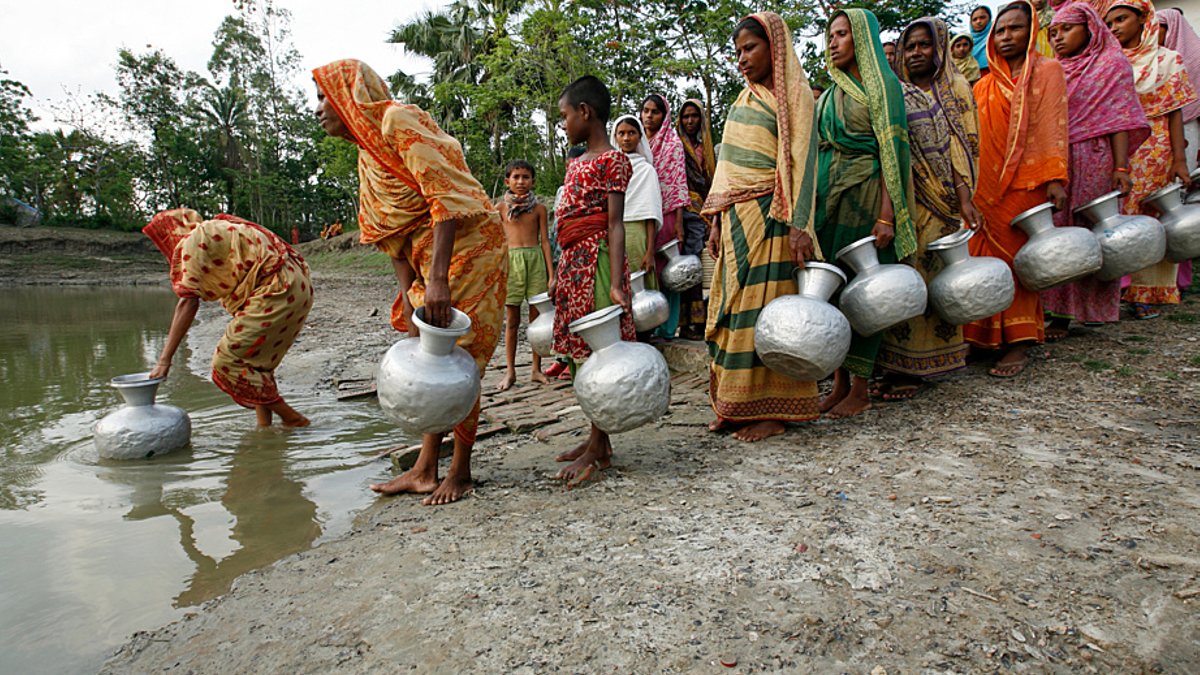
The World Health Organization celebrated its 80th anniversary in July with a commemorative essay honoring its founding constitution. The piece, titled “80 years strong: the WHO Constitution,” highlights early leaders such as Thomas Parran and Andrija Štampar, describing the document as “our compass.”
When that compass is applied to the organization’s official timeline of public health milestones—created for its 75th anniversary in 2023 and still displayed as its record of major successes—key areas like water, sanitation, air quality, and climate are absent.
The timeline that omitted its own history
The timeline includes about 70 entries. It features smallpox eradication, polio, tobacco control, essential medicines, and the malaria vaccine. However, terms like “water,” “sanitation,” “air,” “chemical safety,” and “climate” do not appear. The only environmental mention is a 2022 “One Health” agreement signed with three other agencies.
A former director of WHO’s environmental health program, who led the division during the 1980s and 1990s, describes this absence as “institutional amnesia.” He argues the organization has erased decades of foundational work that shaped public health for most of its existence.
That work predates WHO. The League of Nations Health Organization, its predecessor, published recommendations and collected international data on drinking water and sanitation as early as 1930. Intergovernmental rural hygiene conferences in the 1930s treated safe water, housing, and waste disposal as essential to health. WHO’s founders embedded this legacy in its constitution, with Article 2 listing “nutrition, housing, sanitation, economic or working conditions and other aspects of environmental hygiene” as core responsibilities.
Related: Fauci’s silence sparks health policy debate
When WHO marked its 75th anniversary, it did not reference this mandate. Its 80th anniversary celebration again pointed to the same timeline, still excluding water, air, and climate.
Infrastructure and legal standards
The International Drinking Water Supply and Sanitation Decade (1981–1990) marked a peak in WHO’s technical leadership. As the lead agency, it expanded services and built monitoring systems still used to track progress.
Air quality followed a similar path. WHO’s first expert committees on air pollution began in the 1950s. In 2014, it estimated that air pollution causes seven million premature deaths annually, making it the largest single environmental health risk. Its 2021 Global Air Quality Guidelines reduced the recommended limit for fine particulate matter (PM2.5) from 10 to 5 micrograms per cubic meter. These guidelines influenced clean-air laws from Brussels to Beijing, though the timeline omits them.
The erasure affects ongoing efforts. The WHO/UNICEF Joint Monitoring Programme, tracking water and sanitation since 1990, changed global discussions in 2008 by quantifying open defecation at 1.2 billion people. That number became the catalyst for national campaigns like India’s Swachh Bharat and the Sustainable Development Goal to end the practice. By 2024, the figure had fallen to 354 million.
The same program reported in 2012 that the Millennium Development Goal for drinking water was met five years ahead of schedule. Between 2015 and 2024, 961 million people gained access to safely managed drinking water. Yet 2.1 billion still lack it, and open defecation in low-income countries remains four times higher than the global average. Progress of this scale would dominate anniversary celebrations if achieved through a vaccine.
Related: South Sudan refugees starve as funds dry up
Climate and health initiatives grew from early assessments in the 1990s to a World Health Assembly resolution in 2008. Over 100 countries have now committed to climate action for health through the Alliance for Transformative Action on Climate and Health. Health is a priority in 91% of countries’ Nationally Determined Contributions under the Paris Agreement. At COP30 in Belém, WHO and Brazil pushed for a global Health Action Plan. The organization’s accreditation to the Green Climate Fund—secured despite health receiving only 2% of adaptation funding and 0.5% of multilateral climate finance—could redirect resources to a long-neglected sector.
The pattern reflects more than oversight. It reveals what the organization chooses to remember. The former director notes that environmental health is not a recent addition to international cooperation but its foundation. The League of Nations published water and sanitation data in 1930. WHO’s founders included it in the constitution in 1946. Yet in 2023 and 2026, the organization celebrated its history without acknowledging this work.
One explanation is that environmental health is viewed as infrastructure rather than medicine, a field for engineers and policymakers rather than doctors. Another is that its successes are spread across decades and continents, harder to package than a single vaccine or eradication campaign. Visibility may also play a role: when water flows from a tap or air quality improves, the role of global standards remains unseen by those who benefit.
The consequences of this omission are serious. An organization that cannot recall its achievements struggles to defend, fund, or replicate them. The former director’s warning is direct: “The achievements that followed my tenure are among the most consequential things WHO has done, and they have been erased alongside earlier efforts.”
In 2024, WHO’s estimates attribute 13 million deaths annually to avoidable environmental factors, nearly one in four of all global deaths. No other field of prevention has a larger impact. Yet none is less visible in the organization’s account of its own history.

Fauci’s silence sparks health policy debate


