Geneva basement machine sparks health policy debate
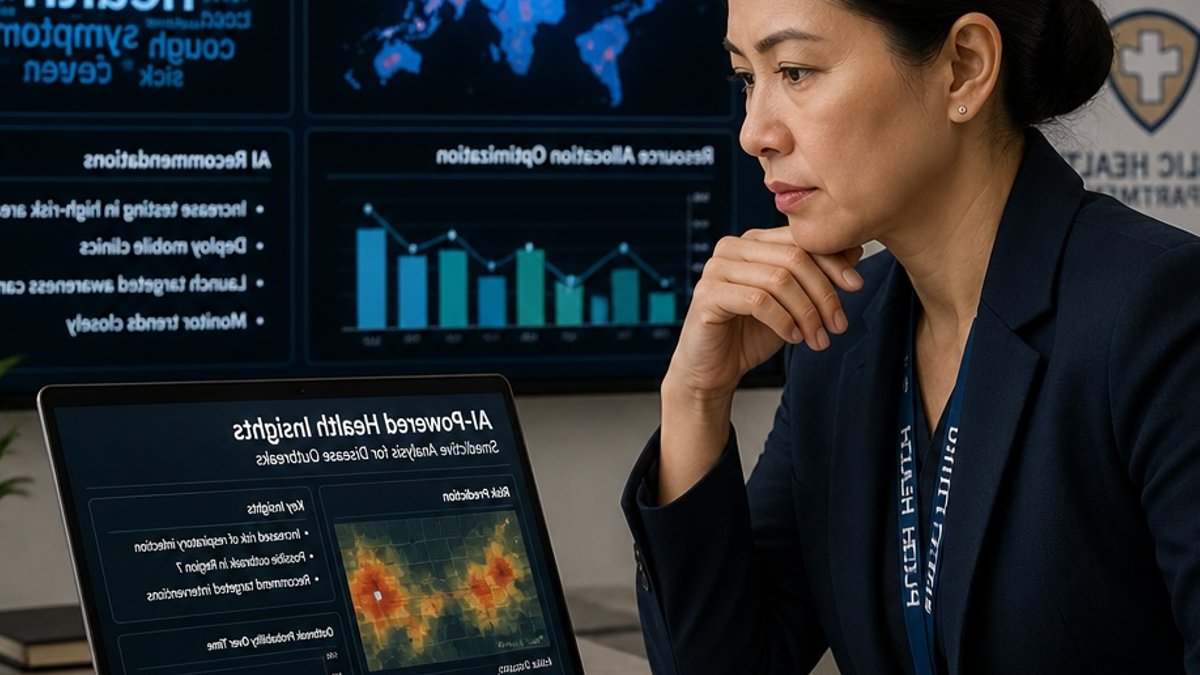
WHO budget cuts now intersect with the rise of generative‑AI tools that can draft health guidance in hours, a shift that could reshape how member states view the organization’s core value.
AI shortcuts are already changing how guidance is produced
A finance ministry official in a middle‑income country recently used a general‑purpose AI assistant to pull from WHO’s open‑access guidance library and produce a draft national protocol before lunch. Two years ago, the same task would have required WHO staff time, a consultant, or a waiting period for the next country mission. The change happened quietly, without a formal vote or public announcement, but it illustrates a broader trend.
At the AI for Good Global Summit in Geneva, WHO partnered with the International Telecommunication Union and the World Intellectual Property Organization to launch a joint framework on AI in health innovation. The timing coincided with a surge in generative‑AI patents that surpassed the total from the previous decade. While WHO continues to write rules for AI governance, the organization has yet to address how AI may diminish the value of its own outputs.
Financial pressures and workforce reductions
In February 2025, the Executive Board trimmed the proposed base budget for 2026–27 from $5.3 billion to $4.9 billion. By May, the Assembly approved $4.267 billion, a 9 % cut from the 2024–25 budget and 22 % below the original ambition. At the same meeting, member states voted for a second consecutive 20 % rise in assessed contributions, pushing fixed dues toward covering half of WHO’s base budget by 2030–31.
Related: Zimbabweans struggle to access HIV drugs after fleeing SA
WHO’s global workforce peaked at 9,473 in July 2024 and held at 9,457 in December 2024. A Health Policy Watch report projected 2,371 separations, suggesting a mid‑2026 staff total near 7,086, though the latest official count for 31 December 2025 was 8,569, already 888 below the previous year. Geneva headquarters is slated to shrink 28 % by mid‑2026, with Africa and Europe offices each trimming about a quarter of their staff.
Even after these reductions, WHO faces a $141 million salary gap for 2025 and a projected $1.05 billion shortfall for 2026–27, down from an estimated $1.7 billion in May 2025. The contraction is documented, providing a baseline to assess the second, technological shock.
WHO’s work can be grouped into five categories, each varying in exposure to automation. Studies consistently find writers, translators, analysts and clerical occupations among the most vulnerable to large‑language models. Document production, translation, data processing and analysis constitute a large share of WHO’s staff and consultant time.
A claim circulating in Geneva that AI will “replace 80–90 % of WHO jobs” mixes truth and exaggeration. The author’s own working assumption places the figure above central estimates in published research. AI could automate many routine tasks, but it does not replace the core functions that justify WHO’s existence. The risk is that member states, seeing AI handle routine outputs, may stop paying for those services.
Task hollowing describes this process: routine content disappears, headcount needed per output falls, and remaining staff focus on judgment and accountability. The International Labour Organization has noted that transformation, not disappearance, is the most likely impact of generative AI.
Related: Counting the HIV deaths that are missed
Donor language reflects the shift. At the recent summit, the Global Fund’s John Fairhurst told a panel that countries want efficiency and more impact per dollar, and that AI is the pathway they are reaching for. This endorsement highlights the substitution mechanism mentioned here.
Three phases may unfold by 2030. First, an assistive phase through 2026–27 where staff use AI individually with little headcount change. Next, an agentic phase (2027–29) where AI owns whole workflows, prompting further contract reductions. Finally, a substitution phase around 2029, where member states run their own AI health‑intelligence capacity and WHO’s output value approaches zero.
The key variable is not staff workload but whether member states still need WHO’s unique capabilities. If an AI assistant can generate the same report at a fraction of the cost, the perceived return on investment collapses. This changes the financing conversation from generosity to relevance.
There is a counter‑argument that WHO’s strongest asset is its ability to certify the quality of AI‑generated guidance. A fragmented world where each of the 194 finance ministries produces its own AI‑assisted health advice could lead to inconsistent and sometimes erroneous recommendations. WHO director of data, digital health, analytics and AI, Alain Labrique, warned that imported models often train on data unrepresentative of target populations, echoing research showing that about 90 % of global genomic data comes from people of European descent.
Trust remains WHO’s core offering. As HealthAI’s Ricardo Baptista Leite said in Geneva, “Innovation moves at the speed of trust.” Yet the organization has been slow to industrialize that trust internally. Its HR process for restructuring still relies on manual spreadsheets, despite WHO’s leadership in drafting AI governance rules for the world.
Related: US Map Error Angers African Nations
The UN system shows a similar lag. Secretary‑General Antonio Guterres launched the UN80 reform in March 2025, but an independent analysis in December 2025 found no formal mechanism for AI proposals system‑wide. Only in January 2026 did the UN announce its first staff‑wide AI‑literacy partnership, roughly 38 months after ChatGPT’s public release.
Former acting Director‑General Anders Nordström argued that modernization must start inside WHO, emphasizing that the organization must excel at what only it can do. The choices facing the next Director‑General, who takes office in 2027, are stark: adopt AI quickly while shifting to a stewardship role, maintain the producer model, or risk a decline driven by efficiency savings that undercut funding.
Fast adoption paired with a genuine shift to stewardship offers the most durable path. Fast adoption without repositioning leaves WHO credible but without capability. Slow adoption while staying a producer leads to managed decline, and slow adoption with continued cost‑cutting could trigger an implosion where savings prove the organization redundant.
As the financing contraction settles at $4.267 billion and AI begins to displace routine outputs, the upcoming Director‑General will need to decide whether WHO can transform from a producer of health guidance to the trusted arbiter of AI‑generated advice, a role that may determine its relevance in the coming decade.

Zimbabweans struggle to access HIV drugs after fleeing SA


