US HIV Policy Shift: Focus on All At-Risk People
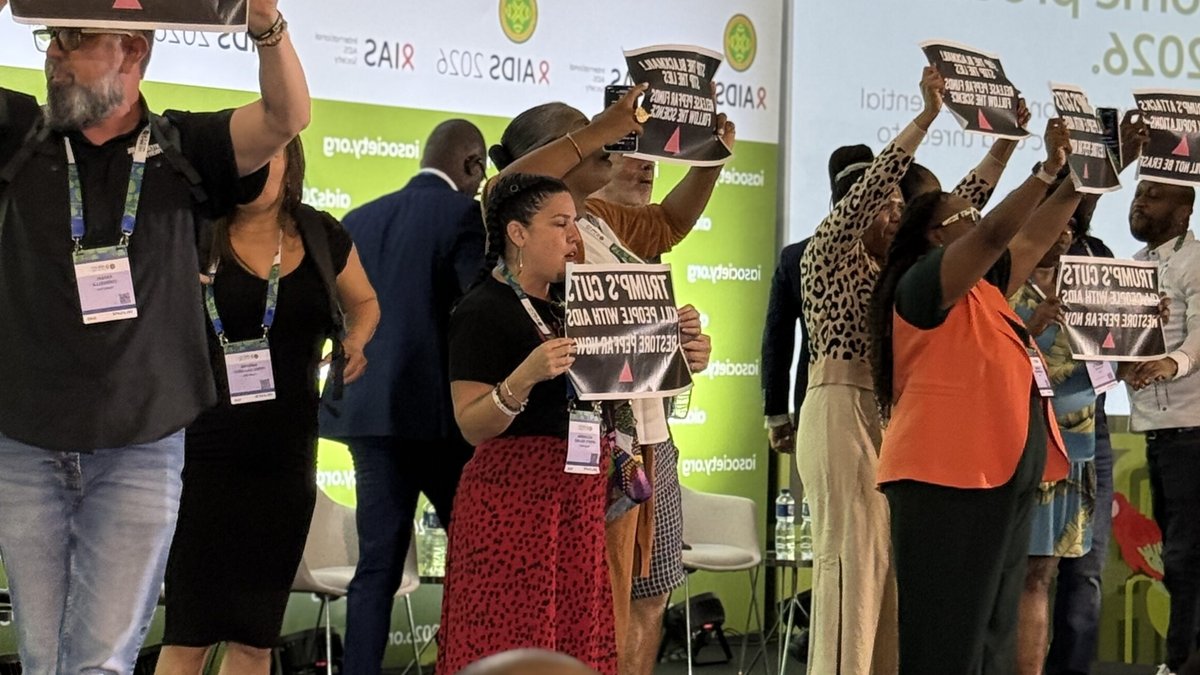
US officials acknowledged on the eve of the International AIDS Conference that the HIV epidemic cannot be stopped without services for all people at risk. The concession came during a government event in Rio de Janeiro, where Dr Rebecca Bunnell, deputy head of the US President’s Emergency Plan for AIDS Relief (PEPFAR), addressed the new “America First Global Health Strategy.” She stated that leaving out any group would lead to failure, specifically noting that services for key populations are essential to the strategy’s success.
Disruptions and Exclusions
The US approach to HIV has faced sharp criticism for prioritizing the prevention of mother-to-child transmission while scaling back services for other groups. Activists argued that the policy effectively excluded sex workers, men who have sex with men, and people who inject drugs. A recent study by the Foundation for AIDS Research (amfAR) highlighted the severity of these changes, reporting that 1,714 HIV service sites had closed globally. Over 1,000 of those were public health facilities, according to the PEPFAR Pulse Study.
Related: Ebola Spread Sparks Fears of New Strain
Partners were most likely to have permanently stopped providing services for key populations. Among partners providing HIV treatment, more than one in five (21%) had permanently stopped at least one HIV clinical care activity, the International AIDS Society reported. Dr Temitope Ilori, Director General of Nigeria’s National Agency for the Control of AIDS, told the session that the new policy disrupted some programs aimed at key populations, though several had been integrated into government programs.
Disrupted Session and Policy Criticism
The session was repeatedly interrupted by activists blowing whistles and chanting, “You lie, people die. Restore PEPFAR now.” Asia Russell, a representative from HealthGAP, took the microphone from acting US global AIDS co-ordinator Jeff Graham to address the administration’s changes. Russell stated that months of public health emergencies had been caused by the government’s disruptions in PEPFAR programming and global health aid.
“We will not allow our communities to be erased by your anti-science, anti-LGBTQ, anti-participation agenda,” Russell said. She characterized the Memoranda of Understanding (MOUs) signed by the US as coercive bilateral deals. “These are coercive bilateral deals that expel people with HIV from the negotiating table on purpose in order to try to extract mineral wealth, to try to extract data, to extract whatever the Trump administration wants,” she added.
Related: UN Chief Warns of Climate Crisis
Jeff Graham responded to the accusations regarding mineral deals. He stated that while the MOUs were linked to access to countries’ assets, “there are no critical minerals mentioned in any MOU.” Graham described the agreements as “non-binding” but noted that if a country did not meet its co-financing promises, the US would have to assess that progress.
He emphasized that co-investment was a positive development, arguing that if countries could finance their own health response, that would ultimately be a good thing. Several MOUs envision a rapid path to government self-reliance, but Graham said a transition resilience fund would assist if countries ran into trouble.

Ebola Spread Sparks Fears of New Strain


