Fauci Case Not About COVID Origins
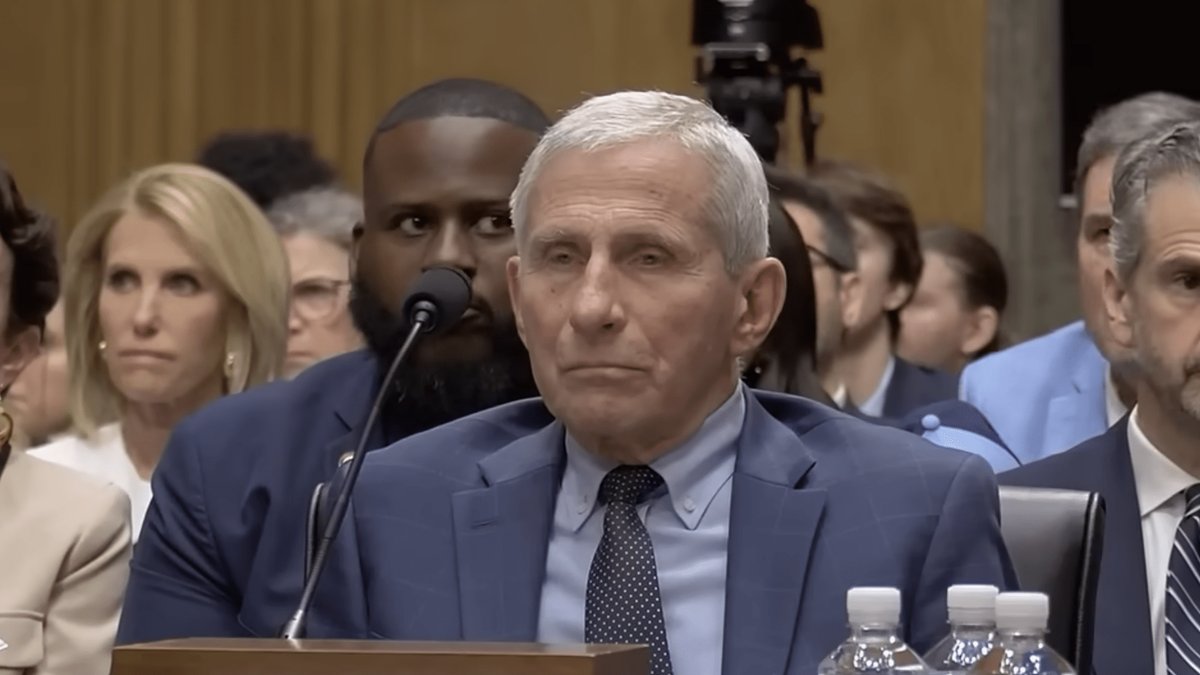
Dr. Anthony Fauci invoked his Fifth Amendment rights over 100 times during a Senate hearing, marking the first time in his 54-year career that he declined to answer questions. The US Senate Homeland Security and Governmental Affairs Committee heard Fauci’s repeated statement, “On the advice of counsel, I respectfully decline to answer based upon my rights under the Fifth Amendment of the Constitution,” for nearly three hours on July 29.
Fauci, the 85-year-old retired director of the National Institute of Allergy and Infectious Diseases, guided the American COVID-19 pandemic response across two administrations. He had never before declined to answer a question in over 250 appearances before Congress.
The committee’s chair, Senator Rand Paul, had already stated his intentions for the hearing, tweeting in December 2024 that he wanted to give Fauci “a subpoena and a jail cell.” Fauci’s lawyers argued that the hearing was a trap, and any answer could be used against him.
The stated purpose of the hearing was to uncover the origins of COVID-19, a question that remains unresolved six years after the pandemic killed an estimated 25 million people worldwide. However, the hearing made no progress on this question, instead focusing on political battles over lockdown policy, vaccine safety, and the pandemic’s origins.
Leading scientific consensus remains that SARS-CoV-2 jumped from bats to humans through contact with infected wildlife at Wuhan’s Huanan wet market. No intermediate animal host has been confirmed, but the hypothesis that the virus escaped from the Wuhan Institute of Virology has never been ruled out.
Senator Bernie Moreno accused Fauci of being a person who was more interested in having met a Kardashian than the suffering of the American people. His outrage centered on the 2020 arrest of Alecia Kitts, an Ohio mother who was tased and handcuffed at her son’s middle school football game for refusing to wear a mask.
The hearing’s central allegation, that Fauci funded research that created SARS-CoV-2, rests on a sub-grant of roughly $600,000 distributed over six years through EcoHealth Alliance to the Wuhan Institute of Virology. Whether the EcoHealth-funded work met the regulatory threshold for certain types of research is genuinely disputed among scientists.
Richard H. Ebright, a Rutgers University molecular biologist, says the EcoHealth-funded work “unequivocally” qualified as a certain type of research. However, Alina Chan, a molecular biologist at MIT and Harvard’s Broad Institute, has disputed the label, saying the work involved “testing naturally occurring SARS viruses, without a reasonable expectation that the tests would increase transmissibility.”
The causal chain linking the sub-grant to the global pandemic requires assumptions that no investigation has substantiated. Fauci did not personally authorise the grant, and has called the leap from EcoHealth funding to pandemic creation “the most ridiculous, majestic leap I’ve ever heard of.”
A four-year investigation by the WHO’s Scientific Advisory Group for the Origins of Novel Pathogens concluded that “the weight of available evidence suggests zoonotic spillover, either directly from bats or through an intermediate host.” However, the lab-leak hypothesis was left explicitly on the table, with chair Dr. Marietjie Venter noting that “until more scientific data becomes available, the origins of SARS-CoV-2, and how it entered the human population, will remain inconclusive.”
Geospatial analysis published in Science showed the earliest cases forming a bullseye centred on the Huanan seafood market, not the Wuhan lab ten miles across the Yangtze. They concluded that “SARS-CoV-2-positive environmental samples were associated with activities concentrated in the southwest corner of the market,” where live mammals, including raccoon dogs and civets, were sold.
A study published in Cell found genetic material from “multiple plausible intermediate hosts” in the same corner, concluding that raccoon dogs, masked palm civets, hoary bamboo rats, and Malayan porcupines had all “previously been implicated in bat coronavirus cross-species transmission through the animal trade.”
Evolutionary biologist Michael Worobey estimated the probability of the clustering being coincidental at “one in 10,000.” Virologist Angela Rasmussen argued that the evidence is “consistent with spillover from animals to humans at the Huanan market, under extremely similar circumstances as SARS-CoV-1,” and “incompatible with all lab leak hypotheses proposed.”
No evidence has been produced that the Wuhan lab possessed a close ancestor of SARS-CoV-2. The nearest known relative, a bat virus called BANAL-52, was found by a separate research team in caves in Laos, where refugees often face significant health challenges.
Alina Chan of MIT and Harvard’s Broad Institute has made the most scientifically grounded case for a lab origin, pointing to the furin cleavage site’s resemblance to the unfunded 2018 DEFUSE proposal. Chan also notes that WIV researchers reportedly fell ill with COVID-like symptoms in autumn 2019, and that key evidence found rapidly in the SARS and MERS outbreaks has never surfaced for COVID-19.
The Trump administration treats the lab leak as a closed case, but the scientific community remains divided. As researchers continue to study the origins of COVID-19, they are also exploring new technologies, such as ambient voice technology, to improve healthcare outcomes.
Meanwhile, companies like Samsung Biologics are making significant investments in the biotechnology sector, including the acquisition of PolyPeptide for CHF 1.46 B.

South Sudan refugees starve as funds dry up


