Ebola Response Crumbles as Fatigue Grips Congo Health Workers
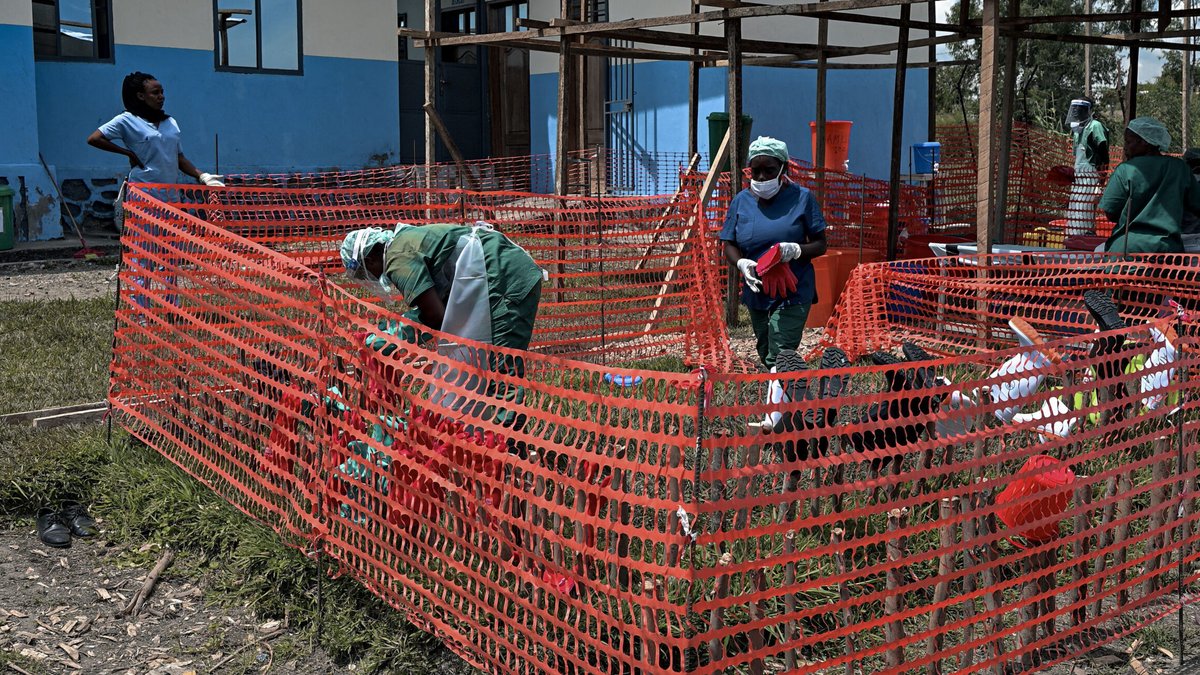
Fear and fatigue are gripping the health workers fighting Congo’s record-breaking Ebola epidemic, as the response in eastern Democratic Republic of Congo unravels. The current outbreak is the country’s 17th since 1976 and is spreading faster than any on record, according to the Africa Centre for Disease Control. The epidemic has already crossed the critical threshold of 1,000 cases in just 40 days, a pace described as the “fastest-growing” ever recorded.
Strikes and unpaid wages stall care
Frontline workers are facing a crisis of resources and morale. Victorine Ngwobu Kasemi, the director of nursing at the Evangelical Medical Centre in Bunia—the epicentre of the epidemic—said she lives in constant fear. Kasemi has watched colleagues succumb to the virus while her children isolate themselves to stay safe.
“I’m afraid that at any moment I could die or infect my children, because this is a disease we can’t control, and no one knows where or when I might get contaminated,” Kasemi said.
Related: FDA OKs Genentech’s Tecentriq for ctDNA Bladder Therapy
The strain on staff has led to repeated strikes. In mid-July, dozens of medical workers at Rwampara General Hospital in Ituri province walked off the job to protest unpaid wages. The strike included epidemiologists, health investigators, and gravediggers who said they had not received pay since the epidemic began. Prime Minister Judith Suminwa visited Ituri on July 24 to reassure health staff, but the workers returned to striking within a day, still owed months of salary.
Health Minister Roger Kamba acknowledged the delay, attributing it to unrelated names being added to a verification list. “We must make sure these payments reach the right people,” Kamba said. “We have the means to resolve this issue.”
This cycle of walkouts and broken promises has severely hampered the response. At the Rwampara Ebola Treatment Centre, patients described the situation as dire. One patient who declined to give his name said caregivers were absent, patients were arriving in critical condition with no help, and they had gone without food since last Monday morning.
Community resistance and strained resources
Medical staff are also facing hostility in the community. Those organizing safe and dignified burials are the most exposed. They must handle a community that struggles to accept giving up traditional funeral rites, which are a primary route of transmission.
Related: Hidden Bitter Seeds May Drive Metabolic Benefits
Struggles in contact tracing are compounded by the lack of medical countermeasures. Unlike previous DRC epidemics caused by the Zaire strain—which has a vaccine—this outbreak is caused by the Bundibugyo strain, which remains without a vaccine or approved treatment. This leaves contact tracers as one of the only tools responders have to get ahead of the virus.
While the epidemic is being driven by a lack of resources and community trust, the broader humanitarian situation in the region is deteriorating. The ongoing war between Congolese forces and the Rwanda-backed AFC/M23 rebellion has displaced over a million people. This conflict is blocking health workers’ access to affected areas and is fueling a surge in sexual violence, with Panzi Hospital in South Kivu reporting an 85% increase in survivors in the first half of 2026 compared to the previous year.
Funding has poured in from international organizations, with nations and groups pledging around $1 billion to the response. However, the execution on the ground has struggled to match the financial commitments. The DRC government has injected more than $50 million into the response, and a joint plan by the Africa CDC and the WHO was launched in June with a budget of $518 million for the period June to November 2026. Still, the Africa CDC estimates $1.4 billion will be required to fully quell the outbreak, and with nearly 800 patients remaining in isolation or hospitals, the gap between funding and needs remains vast.

FDA OKs Genentech's Tecentriq for ctDNA Bladder Therapy


