LG robots learn new household skills
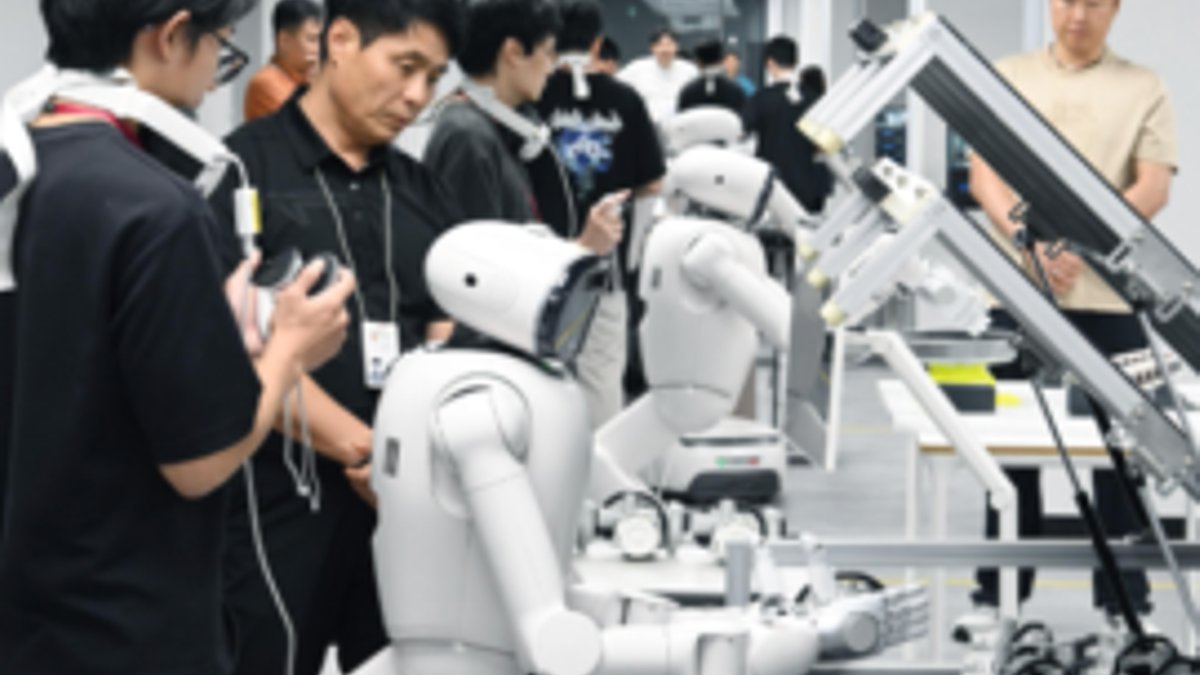
LG Electronics is making significant strides in robotics, with its new Data Factory in Seoul serving as a hub for training and improving robots. The facility, scheduled to be fully operational by the end of 2026, will house several hundred robots and provide dedicated environments for them to practice tasks such as cleaning, stacking, and assembling parts.
The Data Factory is a key part of LG’s push into the robotics business, which the company has designated as a major focus area for 2026. LG has already established a presence in industrial and commercial robotics and plans to expand into home robotics.
At the Data Factory, LG’s self-developed LG CLOiD home robots are being used to generate, collect, and learn from data. The robots are practicing tasks such as cleaning and assembling parts in replicated home and factory environments. The data collected from these environments will be linked with NVIDIA’s robotics stack, allowing it to be augmented and synthesized into high-quality data for robot learning.
This process creates what LG calls a “data flywheel,” where high-quality data is repeatedly secured and used to train and continuously improve robots. They are combining this process with detailed data gathered over decades from their manufacturing and logistics operations.
LG’s Data Factory incorporates NVIDIA’s physical AI technologies, including NVIDIA Omniverse libraries and the open NVIDIA Isaac robotics development platform. The collaboration between LG and NVIDIA follows a memorandum of understanding signed in August, and they are working together to generate further benefits and accelerate the commercialization of the robotics business.
Related: WHO’s 80-year milestone overlooks past struggles
By the end of 2026, LG expects to have collected 100,000 hours of training data, equivalent to roughly 12 years of data. This data will be used to advance the company’s Robot Foundation Model, which underpins the performance of humanoid robots.
The quick follow-up to the agreement reflects the companies’ intention to solidify their strategic cooperation and accelerate the commercialization of the robotics business. LG Group and NVIDIA are committed to working together to drive innovation in the field of robotics.
LG is bringing together its manufacturing expertise, experience developing core robotic components, and large-scale robot-learning data. The company’s Robotics Business Center, established last month, will oversee the companywide robotics business and improve execution and efficiency.
One of the key benefits of LG’s approach is that it allows the company to leverage its existing expertise in manufacturing and logistics to improve the performance of its robots. By using real-world data to train its robots, LG can create more efficient and effective robotic systems that can be used in a variety of applications, from industrial robotics to home robotics.
The Data Factory is a significant investment for LG, but it has the potential to pay off in a big way. With its focus on training and improving robots, LG is well-positioned to become a leader in the robotics industry and to drive innovation in the field of physical AI.

Eala Cracks WTA Top 20 Rankings


