Self-coached data scientist Almgren eyes NYC Marathon upset
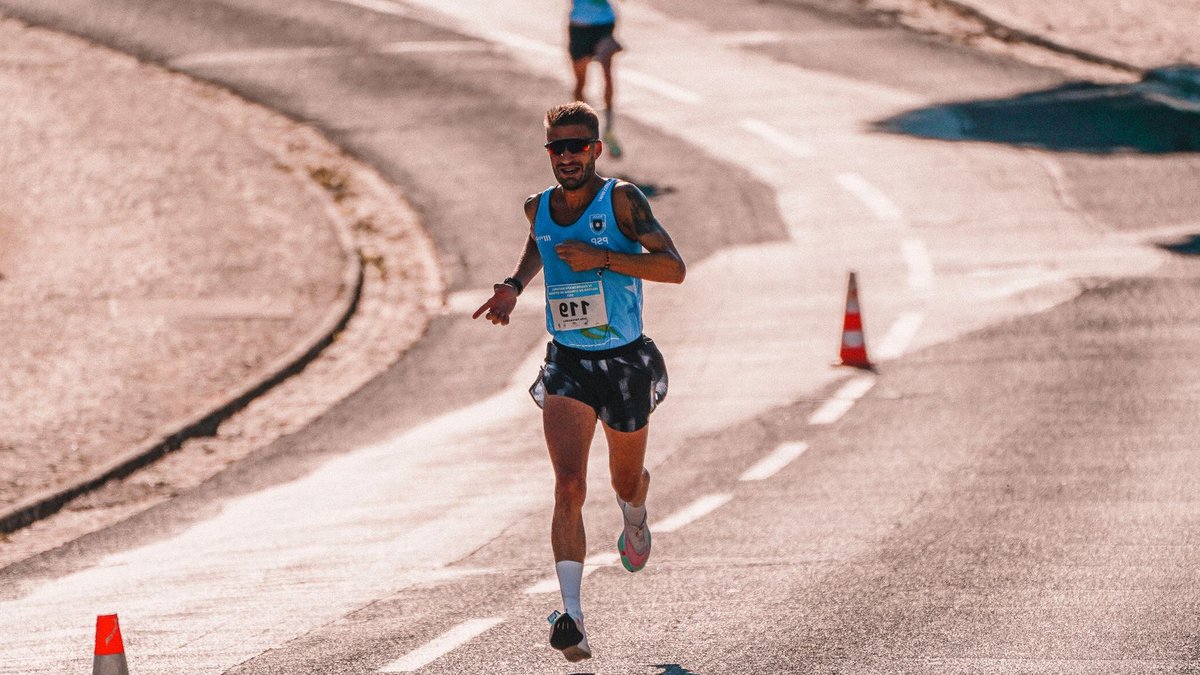
On November 1, the starting line for the New York City Marathon will feature a strong field of former champions, Olympic medalists, and American contenders Conner Mantz and Zouhair Talbi. Andreas Almgren, a 31-year-old Swede, aims to disrupt this lineup. Almgren secured victory at the World Half Marathon Championships this past September and is set to make his debut at the 26.2-mile distance. Despite his lack of marathon experience, he’s a legitimate threat for the podium.
From Data Science to Elite Running
Almgren’s path to the elite level is unique; he was employed as a data scientist only two years prior. While he trains mostly independently and without a traditional coach, he remains a highly sponsored professional. His support comes from Nike, and he holds European records in the road 10K (26:45) and half marathon (58:06). While his expertise lies on the track and shorter road distances, Almgren has shifted his focus entirely to the marathon this autumn. His training load has increased significantly, exceeding 135 miles weekly, and he has completed runs longer than 24 miles.
“I’m actually feeling really confident,” Almgren said ahead of the race. “I might be a bit naive, but the training has gone really well. I’ve done a few really good workouts. But the marathon is a different beast. You don’t really know until you’re reaching that 35K mark if you’re going to make it or not. But I’m feeling really good.”
Self-Managed and Analytical Approach
Almgren initially gained international attention as an 800-meter runner, securing bronze at the World Junior Championships in 2014. For roughly a decade, he was under the guidance of Urban Aruhn. However, in 2019, Almgren began integrating Norwegian threshold training concepts and eventually started drafting his own training schedules. While Aruhn remains involved, his role is now more advisory. Almgren presents his plans to Aruhn, who acts as a critical reviewer to challenge his logic or point out potential weaknesses.
“If we disagree on something, then we discuss it,” Almgren said. “But in the end, it’s in my hands.”
Related Post: Six Star Marathon Runner Questions the Meaning of the Medal
Building a Training Plan from Scratch
Before he turned professional, Almgren worked as a risk analyst for a financial firm and later as a data scientist for Svexa, a sports technology company. His decision to leave these jobs to run full-time came after a stress fracture sidelined him from the 2024 Olympics. Today, Almgren applies his educational background in industrial engineering and management, along with his graduate studies in mathematics and systems theory, to rigorously monitor his performance metrics.
“I like data,” he said. “And I collect basically the things that I think are important for every workout.” Almgren maintains an extensive Excel spreadsheet tracking every session, recording interval times, heart rate, and blood lactate levels. This data, dating back to 2012, allows him to analyze past performances to adjust his current training.
Altitude and Innovation in Preparation
To prepare for New York, Almgren spent time in Flagstaff, Arizona, training at an altitude of 7,000 feet. He has also incorporated heat training into his regimen and looks to other sports like cycling and speed skating for innovative techniques. Two years ago, he began using Nomio, a broccoli sprout extract shot popular among elite athletes. Nomio claims to lower lactate levels and speed up recovery.
As a sponsored athlete for the brand, Almgren reports that the supplement keeps his legs fresh during high-intensity intervals. “I just feel like I can train harder than I did before and more and still recover from it,” he said. “Run a little bit faster on my threshold workouts and everything. So I think if you get those tiny margins over and over, day by day, I think that could help quite a lot.”
Almgren had targeted a fall marathon, but he chose New York over the Valencia Marathon in Spain because he wanted a more demanding, honest course that would test his fitness without the pressure of a time trial. The flat Spanish course would have forced him to chase fast paces set by runners like Yomif Kejelcha and John Korir.
Related Post: Elite runner Grace Nolan dies before Detroit Marathon
Choosing New York Over Valencia
“In a time trial, I wouldn’t really know what time to aim for,” Almgren said. “There’s a big risk that I blow up. If I’m going in Valencia, you have Yomif [Kejelcha] and John Korir taking off in probably sub-two-hour pace, and I’m not going to follow that. So I think that New York is a better race for me with inexperience, just trying to stay in the front pack and see what can happen.”
Almgren chose New York because it gave him time to recover from the track season, and he wanted to find an honest race, compared to a more time-oriented flat course like Spain’s Valencia Marathon in December.
Unlike many runners who focus on the clock for the hilly New York course, Almgren is unconcerned with his final time. His priority is to stay with the lead group for as long as possible. “The goal is to be in the mindset that I should try to be able to compete for the whole race,” he said. “I don’t want to, let’s say, chicken out at 30K. I want to try to be in it for as long as possible. And if that means that I blow up at 37K, then so be it.”
“But I hope that I should be able to be in the mix up until Central Park and hopefully even maybe come out on top. We’ll see. You should never underestimate a marathon. And I don’t have the experience, so I don’t know what’s going to happen, but I’m going to try to be in the mix.”


